
What if tap water
looks or tastes different?
Use Manx Utilities’ own checks before treating a change in tap water as a filter problem. common water complaints page (read 15 October 2026) says a slight taste or smell is probably chlorine and is no cause for alarm. A particularly bad or strong smell or taste, one that stops you drinking the water, or a new smell or taste, means you should contact them. Cloudy water, the same page says, is air and is perfectly safe to drink. If the water is discoloured, run the kitchen tap until it clears. A fuel or solvent smell is a different instruction: the page says that kind of contamination can be extremely harmful, and to contact them immediately. This is not a result for your tap, and it does not certify a filter.
Preparing for launch. This is a sourced guide, not a test of your tap, a certificate for any filter, or an offer to install.
Is a chlorine taste a safety failure?
common water complaints page (read 15 October 2026) says drinking water on the Isle of Man is of a high quality, and that a slight taste or smell is probably chlorine and no cause for alarm. Chlorine is added at the treatment works in very small concentrations to protect against bacterial growth. People supplied shortly after the water leaves the works may notice it more. People at the end of the system are unlikely to, because the chlorine is absorbed as it travels. The page says the taste can be stronger at different times of day. It lists distance from the works, time in the mains, water temperature, where the water is sourced, use first thing in the morning and in the early evening, and faster flow after a burst or when a hydrant is used. It says that variation is perfectly normal.
For the taste itself, the complaints page says an uncovered jug in the fridge for a few hours will reduce it. chlorine page (read 15 October 2026) is a different page. It says to cool drinking water in a clean container in the fridge, and, separately, to place a covered jug in the fridge until the water is cool. It also says not to re-boil the same water in the kettle. Those are three fridge or kettle sentences, and they are not the same. This note does not pick one. Residual concentrations and the year’s tap results stay in Manx mains water: when a filter helps.
Is a TCP taste, or a fuel smell, the same thing?
The complaints page says chlorine can react with plastic or rubber in plumbing and cause disinfectant, TCP and metallic tastes. It names kettles, appliance hoses and tap washers. It says those tastes are not harmful. If the taste is only in hot drinks, it says to boil water in a saucepan to see whether the kettle is the cause. If it is not, try disconnecting the washing-machine and dishwasher hoses overnight, and changing tap washers to an approved type. The page does not say which approval it means. If the water tastes unpleasant at every tap, it says to check the washer on the internal stop tap. Recently fitted taps are one of the cases it names.
Fuel, oil and solvent spills are a separate heading. The page says they can seep through plastic water pipes and contaminate drinking water, which can be extremely harmful to your health. It says to check an oil tank for leakage, especially an older metal one, to take care with fuels and chemicals, to clear spills quickly and dispose of the waste correctly, and to contact Manx Utilities immediately if the supply may have been affected. A kitchen filter is not part of that paragraph.
What if the water is brown or milky?
common water complaints page (read 15 October 2026) says raw water on the Isle of Man is naturally coloured, soft and acidic, and that the intensity of the colour varies with the season and the rainfall. It says all of the water is treated at the treatment works, where all the colour caused by dissolved organic matter, iron and manganese is removed. The word “soft” on this page is not a hardness result. The only published hardness figure, and the named areas with none, are in Water hardness by area on the Isle of Man.
If the supply becomes discoloured, the page says to run the tap which is fed first from the supply, usually the kitchen tap, until it runs clear. Then fill a jug, leave it until any sediment has settled, and pour the clean water from the top. If the problem persists, contact them. It says occasional discolouration on the Island is most often iron and manganese deposits in the mains, disturbed when water changes direction or speed. The flow changes it lists are a burst water main, opening or closing valves, bringing a main back into use after repairs, moving water from one area to another because demand has changed, and heavy use in one area such as fire fighting. Those events can turn the water orange, brown, black or grey. Excess air may make it look white.
The page gives two causes for the deposits. Iron and manganese are in the source water, and inadequate treatment in the past, through decommissioned treatment plants, left iron, manganese and other deposits in the mains. Many mains are cast iron, and the older ones are unlined and have corroded, so rust can be carried through the network. It says those deposits are dealt with by lining or replacing the affected mains. If the discolouration is from mains deposits, it says they are mostly iron and manganese and, as such, are not likely to be harmful to your health. It also says you may not wish to drink the water, or give it to your family, because it looks or tastes unpleasant. If washing has been discoloured, repeat the wash when the water is not discoloured, without fabric softener. If the water remains discoloured, get in touch.
| What you notice | What that page says | When it says to contact them |
|---|---|---|
| Slight chlorine taste or smell | Probably chlorine, and no cause for alarm. An uncovered jug in the fridge for a few hours will reduce it. Filters can be bought to remove chlorine. Check and clean them regularly. The page says it is better to have chlorine in the water. | A particularly bad or strong smell or taste, one that stops you drinking, or a new smell or taste: contact Manx Utilities. |
| TCP, disinfectant or metallic taste | Chlorine reacting with plastic or rubber in a kettle, an appliance hose or a tap washer. Boil water in a saucepan to test the kettle. Then try the hoses, and a washer of an approved type. The approval is not named. | The page says these tastes are not harmful. A new or strong taste still falls under the contact rule above. |
| Fuel, oil or solvent | Can seep through plastic water pipes. Check an oil tank, especially an older metal one, and clear spills. | The page says this can be extremely harmful. Contact Manx Utilities immediately. |
| Orange, brown, black or grey | Run the tap fed first from the supply, usually the kitchen tap, until it runs clear. Fill a jug, let sediment settle, and pour from the top. | If it persists, contact them. If washing is stained, wash it again without fabric softener once the water is clear. |
| White or milky | Air. Fill a glass and leave it for a few minutes. A white rim of scum can be surface tension holding tiny bubbles. | The cloudy-water section says the water is perfectly safe to drink. If white water persists, contact them. |
| Black slime, or a pink film | Biofilm: ventilate and clean. A mild bleach solution on a tap fitting, then flush the tap. Pink film: regular cleaning. The page names an airborne bacterium, in two spellings. | Biofilm is described as generally harmless. The pink-film section does not say that. It says the film may worsen if an activated-carbon filter removes the chlorine. |
| No water, or low pressure | Check the website and the Facebook and Twitter pages named on the page, the internal stop tap and air locks, other external stop taps, and whether neighbours have water. | If you cannot find the source, contact them. The complaints page prints no telephone number. |
Each cell is that page’s instruction. It is not a sample from a kitchen tap, a diagnosis, or a performance claim for a filter.
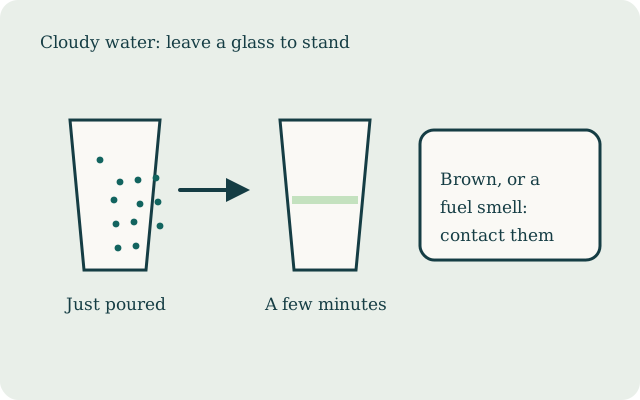
The cloudy-water section is separate and shorter. It says the water is perfectly safe to drink and looks cloudy because of a large volume of air. Fill a glass from the tap and leave it for a few minutes, and the water returns to a clear colour with no cloudiness. In the discolouration section, white water from excess air is described as not something to worry about. A white scum around the side of the glass is put down to surface tension trapping tiny bubbles at the water’s surface. That water, the page says, is not likely to be harmful. If the problem persists, contact them. A private well or borehole is outside this page. The laboratory and Environmental Health pages for that supply are cited in Private wells and boreholes on the Isle of Man.
What is the slime or the pink film?
What is the black slime?
The same page calls black slime in wet rooms a biofilm, or microbial slime. It says bacteria and fungi from the air, the water and household dust can attach to damp surfaces and form a visible black slime, or a stain in various colours. Left in place, it can grow into materials such as tile grout and shower curtains and stain them permanently. The surfaces it names are the inside of cold-water taps, the base of tap fittings, shower heads and shower curtains, bathroom and shower tiles, drains and plugholes, toilet cisterns and bowls, kitchen-sink draining surfaces, and washing machines. It says that although biofilms can appear very unpleasant, they are generally harmless and do not pose a risk to health. That sentence follows the description of this slime. It is not a sample result, and the pink-film section does not repeat it.
The page says there is nothing Manx Utilities can do to the drinking-water supply to prevent biofilm inside a property. It says to improve ventilation so kitchens and bathrooms dry quickly, to clean the affected surfaces, and to reduce food for the growth, including shampoo, soaps, and propellants from hairspray and deodorants. Black slime on a tap fitting can be removed with a small brush dipped in a mild solution of bleach. Flush the tap thoroughly straight afterwards. A plastic insert or other detachable fitting should be removed, cleaned and disinfected regularly. No bleach strength and no product name are given. For the network, before water enters a property, it says biofilm is kept down by residual chlorine, a mains-flushing and pipe-replacement programme, regular cleaning of service reservoirs, and filtration and disinfection of raw water at the works. It says samples at works, service reservoirs and customers’ taps, and samples after renewals, repairs and shutdowns, are analysed for coliforms, which it calls a key indicator to the presence of pathogenic microorganisms.
What is the pink film?
The page says the most likely cause of pink coloured staining is an airborne bacterium. It first spells the name “Serratia Marcescens”, then, in the same section, “Serratia Mercescens”. It says the organism is common in the UK and abroad, grows in damp kitchens and bathrooms, and produces a pinkish film on surfaces that stay moist, including toilet bowls, showerheads, sink drains and tiles. It says the film often appears during and after new construction, or when bathroom fittings are replaced, and that these airborne bacteria can come from many naturally occurring sources. It says the condition may worsen if customers remove the chlorine from their water by using activated-carbon filters. It does not say the film is harmless. The steps it gives are regular cleaning, chlorinous products rather than abrasive ones, periodically stirring chlorine bleach into the toilet cistern, keeping baths and sinks wiped down and dry, and a disinfectant-containing toilet block in the cistern. It says cleaning and flushing with chlorine will not necessarily eliminate the problem, but will help to control the pink bacteria. No quantity of bleach is stated.
When is a filter the wrong step?
Who do you contact for no water or low pressure?
The complaints page says low pressure or no water may be caused by stop-tap issues, an air lock, a burst pipe, or works in the area. The checks it lists are its website, its Facebook page and its Twitter page, for up-to-date information on works; whether the internal stop tap is turned off or the system is air locked; any other external stop taps; and whether neighbours have water. If you cannot find the source, contact them. That page does not print a telephone number or an email address.
contact page (read 15 October 2026) does. The General block says to phone 01624 687687 or freephone 08081624 115, and to email [email protected]. Further down, the opening-hours line prints the freephone as 0808 1624 115 and says it is available 24/7 for emergencies. The hours in that block are Monday to Thursday, 8:30am to 5:00pm, and Friday, 8:30am to 4:30pm, and closed at weekends and on Bank Holidays. The Water Faults heading is only about having no water or low pressure. It says to check the stop tap, and to turn it all the way off and back on because air can cause low pressure. It also says some properties share a supply and a stop tap, and that it is worth checking whether neighbours have turned that tap off. It tells you to check social media for interruption updates. It does not print a water-only telephone number. The two pages are not combined here into one script.
The complaints page mentions a filter in two places. Filters can be purchased to remove chlorine. They vary in price and quality, they should be checked and cleaned regularly, and the page says it is better to have chlorine in the water, because that is what protects against bacteria and keeps the water safe to drink. The other mention is the pink film: the condition may worsen if an activated-carbon filter removes the chlorine. No brand, certificate or reduction is named. No model has been selected for Manx Pure Water, so none is claimed here. An enquiry to this website is not a report to Manx Utilities.
Kitchen filters on this site are a later question, about taste at one outlet, after the supply question is dealt with. They are not a fault line. The year’s published iron and manganese results at taps are in the mains article, not a measurement of the water in your glass today.
Short answers, same sources.
Is cloudy tap water on the Isle of Man safe to drink?
common water complaints page (read 15 October 2026) says cloudy or milky water is perfectly safe to drink and is caused by air in the system. Fill a glass and leave it for a few minutes. The page says it returns to a clear colour. A white scum at the rim is described, in the discolouration section, as surface tension. If the water stays white, the page says to contact Manx Utilities. That is their description of air. It is not a test of your tap.
What should I do if the water is brown, black or grey?
Run the tap fed first from the supply, usually the kitchen tap, until it runs clear. Fill a jug, let any sediment settle, and pour from the top. The page says this colour is most often iron and manganese deposits disturbed in the mains, and that those deposits are not likely to be harmful, though you may not want to drink water that looks or tastes unpleasant. If it does not clear, contact Manx Utilities. Stained washing should be washed again, without fabric softener, once the water is clear.
Why does Manx tap water taste of chlorine, and should a filter remove it?
The complaints page says a slight chlorine taste is no cause for alarm, and that chlorine is there to protect against bacteria. It says an uncovered jug in the fridge for a few hours will reduce the taste. The chlorine page, read the same day, instead describes a clean container and a covered jug, and says not to re-boil the same kettle of water. Filters can be bought to remove chlorine. The complaints page says to check and clean them, and that it is better to keep the chlorine. It also says pink staining may worsen if an activated-carbon filter takes the chlorine out. No cartridge is certified here.
What if the water smells of fuel, oil or solvent?
common water complaints page (read 15 October 2026) says spills can seep through plastic water pipes and that this can be extremely harmful. Check the oil tank, especially an older metal one, clear any spill, and contact Manx Utilities immediately. The page does not suggest a filter for this.
What is the black slime on a tap, or the pink film in a bathroom?
The page calls the black slime a biofilm. It says biofilms are generally harmless and do not pose a risk to health, and that Manx Utilities cannot stop them forming inside a property by changing the supply. Clean them, improve ventilation, and flush a tap after using a mild bleach solution on the fitting. The pink film is a different section. The page names Serratia Marcescens, and later spells it Serratia Mercescens, and does not call that film harmless. It says the film may worsen if chlorine is removed with an activated-carbon filter.
There is no water, or the pressure is low. What should be checked first?
The complaints page says to look for works on its website, Facebook page and Twitter page, then the internal stop tap and any air lock, other external stop taps, and whether neighbours have water. contact page (read 15 October 2026) adds a stop-tap check of its own for no water or low pressure: turn the tap fully off and back on. Its General numbers are 01624 687687 and a freephone printed as 08081624 115, with the opening-hours line printing 0808 1624 115 for emergencies, 24/7. Email on that page is [email protected]. The complaints page itself prints neither number.
Will a home water filter fix discoloured or odd-tasting mains water?
Not on the instructions this page gives for discolouration, fuel, or a loss of supply. Those steps are to run the kitchen tap, to contact Manx Utilities, or both. A filter is mentioned for chlorine taste, with a warning about pink staining if chlorine is removed, and with no brand or certificate. Manx Pure Water has not selected a model, and an enquiry here does not report a fault. A private supply is a different case, in Private wells and boreholes on the Isle of Man.
Read on 15 October 2026.
Every instruction above is taken from the Manx Utilities pages below. They were read on 15 October 2026. Where the complaints page and the chlorine page differ on the jug, and where the contact page prints the freephone in two ways, both wordings are kept. The mains, hardness and private-supply articles are linked for questions this note does not answer. Manx Pure Water is independent of Manx Utilities. Nothing here certifies a product, states a price, or reports a sample from a tap.
- Manx Utilities: Common water complaints — chlorine taste, TCP and fuel smells, discoloured and cloudy water, biofilm, pink staining, low pressure or no water
- Manx Utilities: Chlorine — a clean container, a covered jug, and not re-boiling the same water. A different page from the complaints note
- Manx Utilities: Contact us — general telephone, freephone as printed in two forms, email, opening hours, and the Water Faults checks for no water or low pressure
The shorter Manx water guide is the service overview. This note is only what to do when tap water looks, smells or tastes different.